


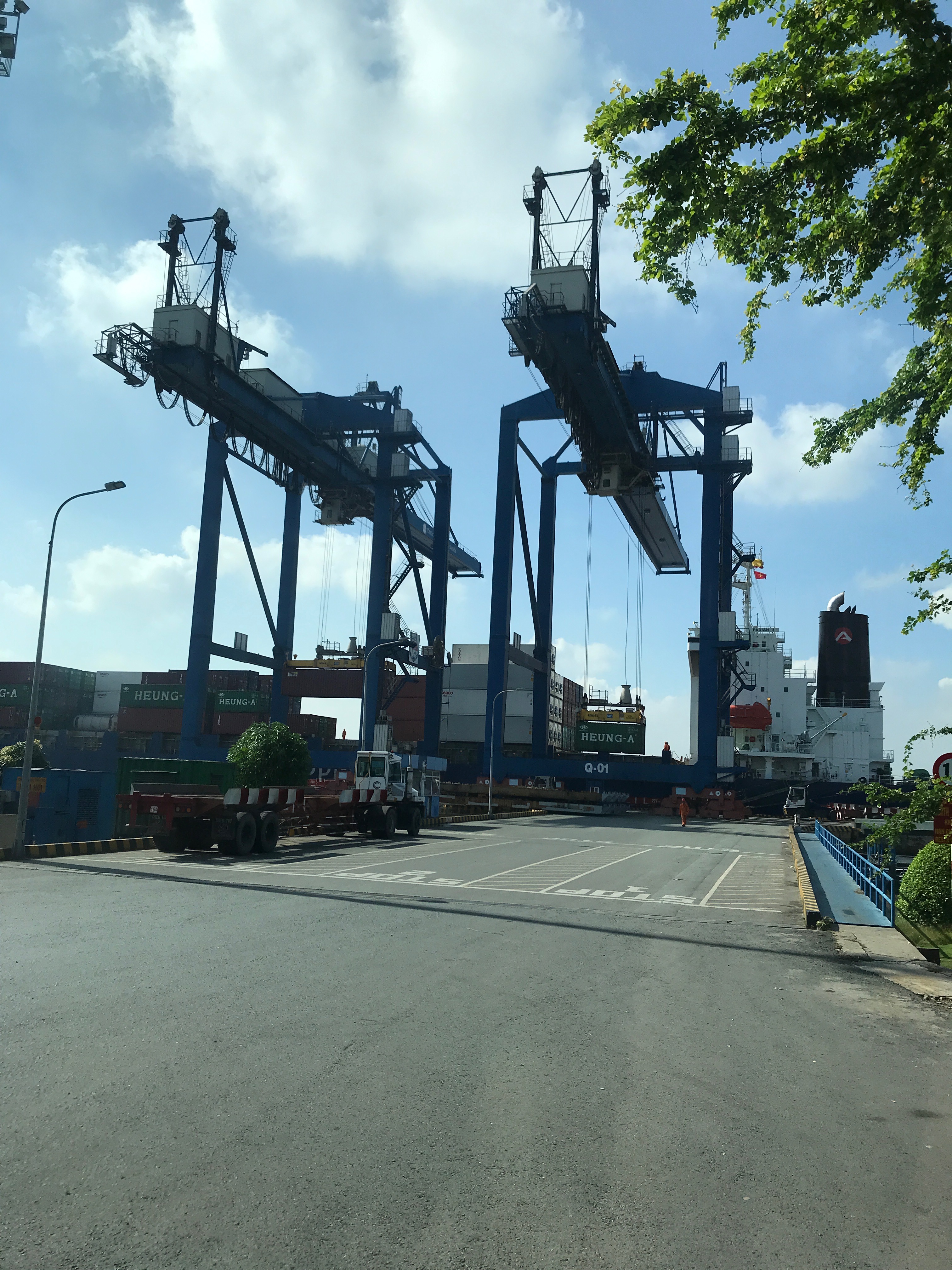
Cat Lai terminal is a port which houses the heavy machinery needed to move shipping containers onto and off of boats. Most of the goods they handle are in giant shipping containers, which are easily moved throughout the gargantuan space with cranes and trucks. At Cat Lai most containers, whether they are being imported or exported, are subject to customs. The only exception is containers which have been cleared at an offsite customs location such as the ones in VSIP. Those containers are classified as blue. Other containers are classified as yellow, which means that they require documentation in order to be cleared. The third classification is red, which requires documentation and a physical inspection. The physical inspection can include an x-ray of the shipping container, or even an opening of the crate so that an officer can inspect the property inside. In the control tower there is a schematic of the entire terminal which displays the location of each container and whether or not it is red, yellow, or blue. They way that each container is tracked is via a serial number. Whenever a container is moved, its location must be manually updated, and then the computer system will recognize the movement.
As an Industrial Engineer, the logistics of moving the crates and figuring out where to store them at Cat Lai was the most interesting part of the site visit. The control room mentioned above was where all of this took place, and most of the logistical planning takes place via the computer system that also tracks the location of each crate. This software is capable of simulating in advance the activities of Cat Lai and combines the location of each crate along with the information about vessels at the terminal to help the operators in the tower direct movement throughout the port.
The Reunification palace was beautiful and since they have kept the architecture and design identical to the way it was when the capitol was located in Saigon I was able to imagine what it must have been like in the last days before reunification. The president would have been hidden in the underground bunker frantically trying to get a grip on the war effort. He could probably have seen the fighting from his balcony. The reason that the palace is called the Reunification or Independence palace is because it symbolizes the reunification of north and south Vietnam or the Independence of Vietnam as a whole. It was the location where leaders from the north and south discussed the reunification.


