


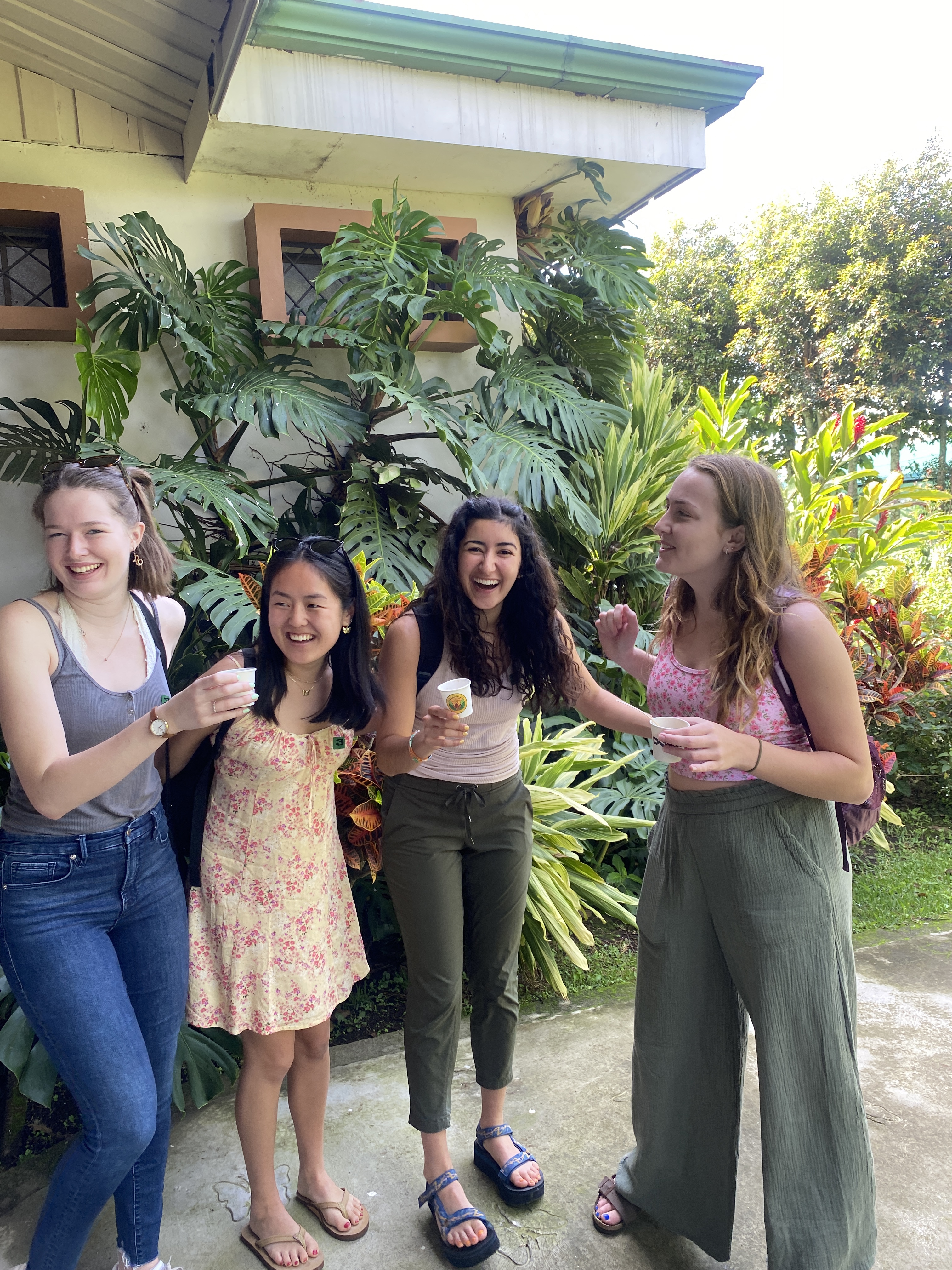


While visiting the Doka Coffee Plantation, my appreciation for coffee grew. We learned about the production, peeling, and roasting process. One thing that stood out to me the most was the employee aspect of the entire process. I learned that less than 20% of the 150 workers they need to pick the beans are from Costa Rica meaning the remaining workers are from Nicaragua. I really admired the resources Doka gave to the employees regarding daycare for the workers’ children in exchange for their labor as a sign of gratitude. Their compensation depends on the amount of baskets or cajuelas they fill at the end of the day. Despite the salary being $2 a basket, in Nicaragua the currency is different so this salary is worth about twice or triple the amount in Nicaraguan currency. Fortunately, the pandemic didn’t have a negative impact on the ability for their out of country employees to come back because of the familiarity of their employees and their commitment to come back each season.
I was fascinated by the fact that Doka’s factory is the oldest running factory in the country. The peeling process involved seven machines powered by the hydraulic systems from the previous machine. The water used to separate the floating and sinking beans is cleaned and reused supporting sustainability. During the picking process, they used a red bucket with a waist strap that fills about 25 lbs of coffee beans. The technology was traditional yet effective which is extremely valued in Costa Rican culture. This process shows that modern technology doesn’t equate to the best coffee. Personally, I think the coffee exceeded my expectations. I tried three different roasts, each providing its own unique, satisfying flavor.