


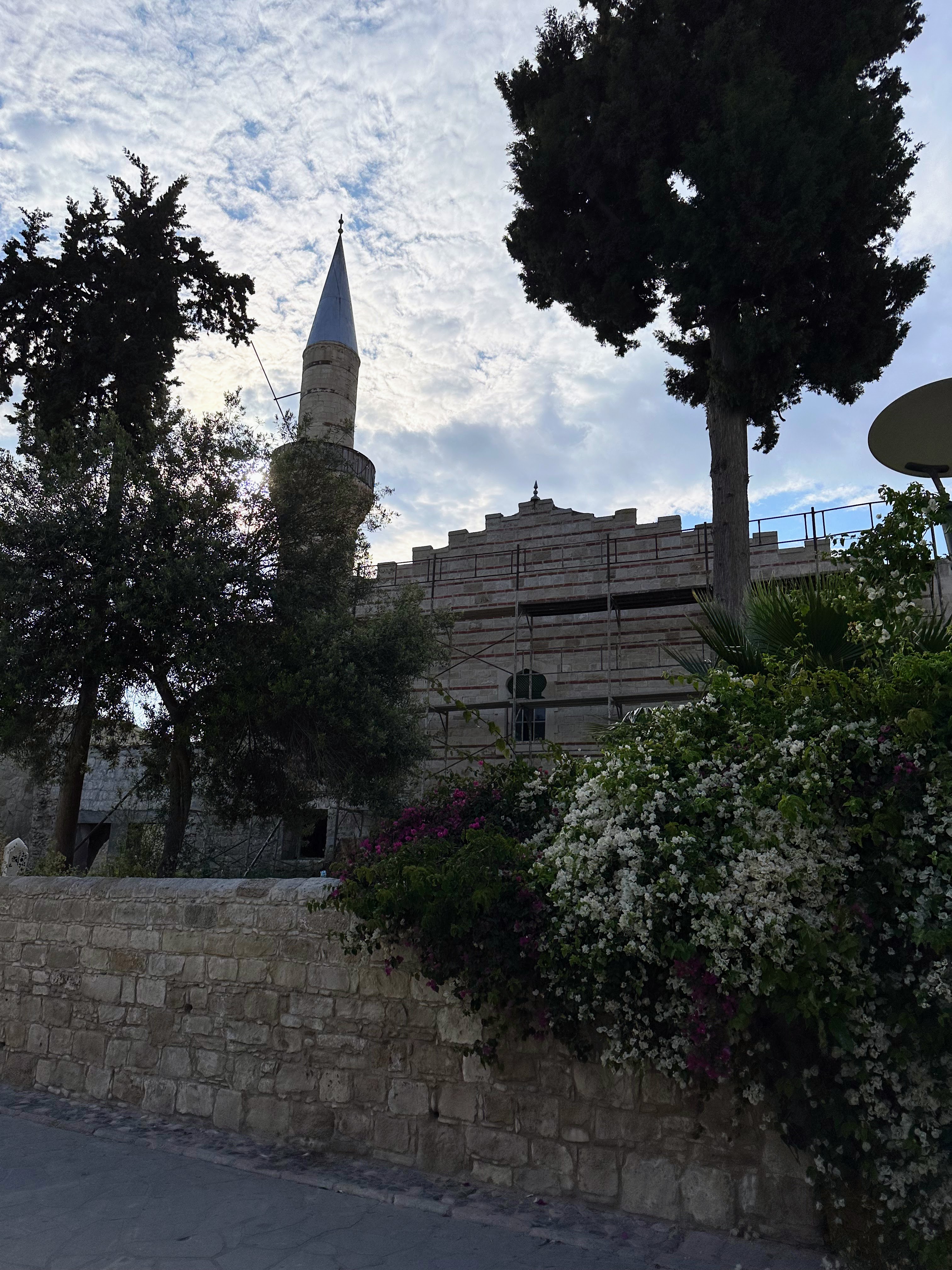
Today we had a lecture with one of the University of Nicosia’s history professors. He started the lecture off by discussing the history of the Cyprus island. How initially it started as a nomad island then progressed from the rule of the Persians, Alexander the Great the Romans the Ottoman Empire, and the British, and how it gained its independence. Along with others concurs during the development of Cyprus. I found it very interesting how cetin aspects of Cyprus and the Cypriots grew and changed with each rule it came under. After the lecture, we had a small walking tour of the town of old Limassol.
During this tour, I noted that many of the buildings that were made during their time resembled the common architecture of each new ruler of Cyprus. For example, with the Ottoman rule many buildings that were constructed were mosques that followed their religion. However, during the rule of England, many mosques were destroyed, and churches were built on top of them destroying an important part of the Cypriote history. I learned the importance of preserving a nation’s history and how it is impacted by the changing of empowerment. This doesn’t just only stem from the change of empowerment amongst nations but as well as the growth of the nation from within. The is a need to preserve the older buildings on the island even though the population is expanding and demanding larger buildings to be built.
In addition to the construction of churches, there were many architectural differences in some of the old buildings that still remained. For example, the introduction of balconies that came with British rule introduced a more open or friendly culture. Overall, I have found that Cyprus still to this day has certan aspects of architecture, community, or lifestyles that stem from each of its previous rulers.

