


Today, we visited the Doka Coffee Plantation and learned all about the coffee process. We went through all the stages, from the coffee plants to roasting the coffee beans. At Doka, they only use arabica coffee for its flavor. The coffee in Costa Rica is considered premium, and because of this, it is said that the best coffee is the coffee you like the best. We started looking at the plants, and I learned that the coffee plant is ready to be planted in the ground after one year, and the coffee will start making coffee cherries in three years. These trees last about 25 years and then have to be removed and replaced with one-year plants because they start producing fewer and fewer coffee cherries. These coffee cherries are hand-picked one at a time and placed in a basket around the worker’s waist. Each basket must have 20 pounds of cherries, and they go through quality control to ensure this.
I learned that the basket pays the workers from Nicaragua, each basket being about 5 dollars. These workers benefit from free housing, electricity, and water. We then visited the oldest wet mill in the country and learned how the coffee cherries are sorted by whether they sink or not. This machine has been working the same since the 1920s. The cherries are then sorted again into machines that take the good cherries to be dried and the bad cherries to be peeled for compost. They dry for about five days, but a mechanical drying machine is used if there is not enough sun. A machine is used to remove parchment from the dry coffee beans. The beans only have 20 percent volume of the original fruit. The dried beans are like peanuts; we can feel the good and bad batches of dried beans, which break easily. The coffee is exported in sacks filled with green seeds. The roasted coffee has not been exported because of its expiration date.
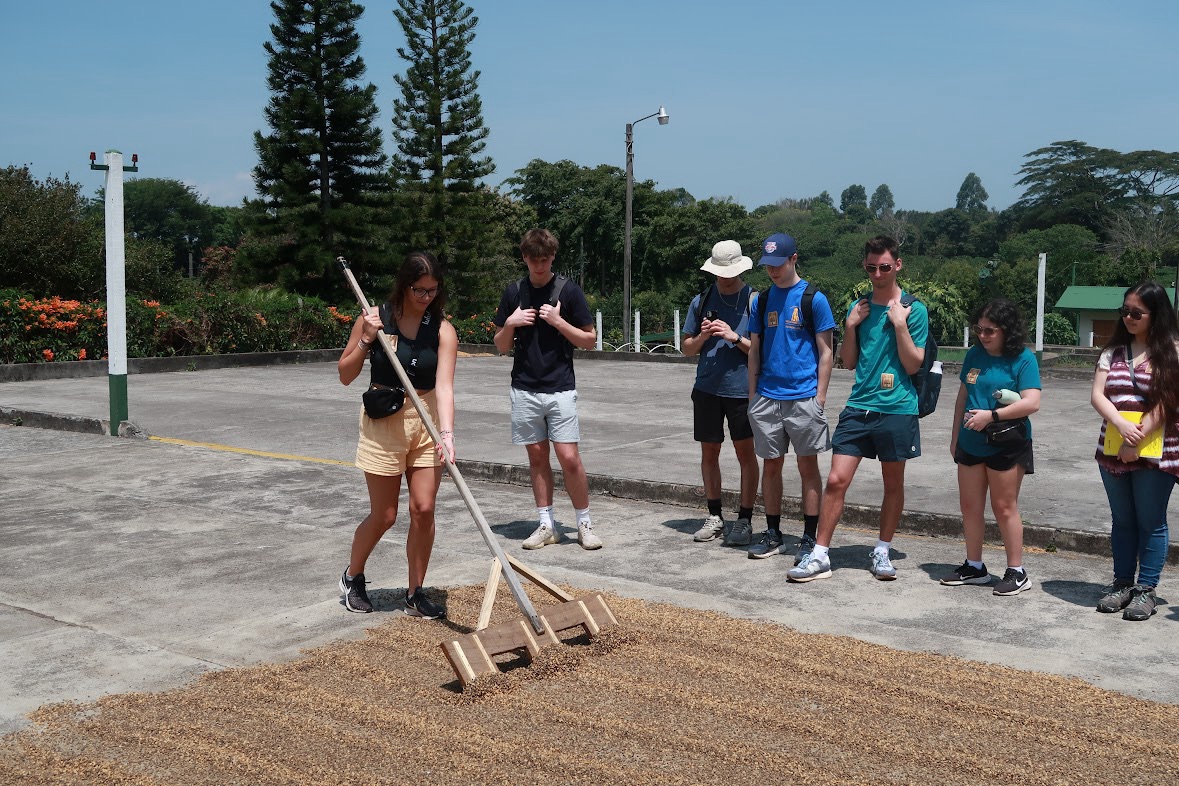
We went outside to see the coffee beans on the ground as we were told they had to be turned every 45 minutes. I and a few other students turned a row of beans with the wooden rake. We then made our last stop, where they roasted the coffee beans. I learned how slight differences in how much the roasted beans change the coffee. A light roast is 15 minutes in the roaster, a medium roast lasts 17 minutes, an espresso lasts 20 minutes, and a dark roast lasts 22 minutes. There are two seasons in Costa Rica: the rainy season and the dry season. Too much rain affects the production, while no rain would result in no coffee. Another fun fact I learned is that there is a competition called the Cup of Excellence, where all the farmers bring their coffee to see who had the best season. Baristas rate everyone’s coffee. Doka won in 2022.
I was surprised by what the coffee plant looked like. I did not realize how small they were. It is also very impressive how they pick the cherries one by one. After learning about it in the pre-departure meetings, it was fantastic to see the process in action. I was also surprised how the whole sorting process involves hydroelectricity. The technology that they are using is working very well for them. Besides picking the beans, other technology might be utilized, such as a machine to flip the dried beans every 45 minutes. Adding this technology could take the jobs of some of the workers, which would be unfortunate. For someone who does not like coffee, I cannot give Doka the appreciation it deserves. I occasionally have a peppermint mocha or pumpkin latte from Starbucks, but other than that, I do not drink coffee. The coffee with foam we had at the beginning of the tour was very good. I enjoyed this coffee tour and am excited for our next trip to Britt.


