


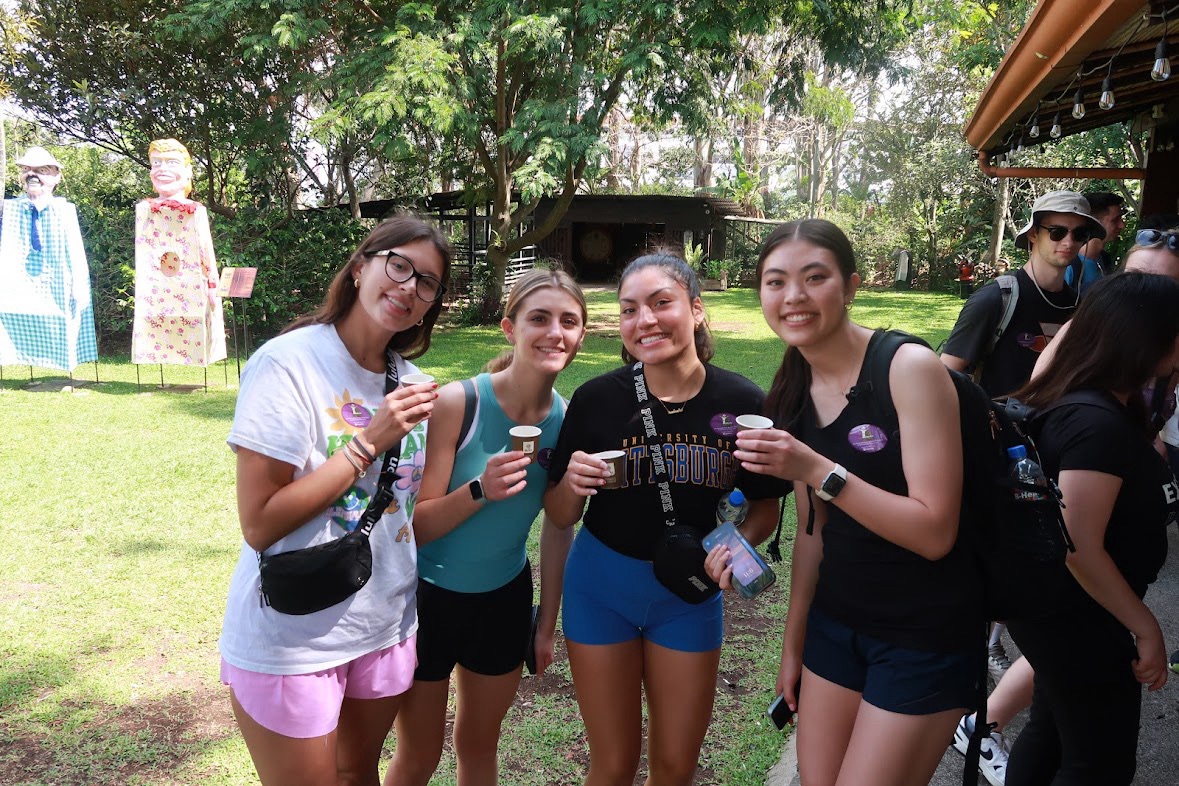
Today, we venture off to Café Britt for a second coffee tour. This tour was much more interactive as we later found out that our tour guides were actors, and they gave us false names. The betrayal. They made the tour a really engaging experience, and they were hilarious. We learned how the different temperatures that the coffee beans grow in result in various flavors. The tour guides took us through the process of coffee from the seed to the roasted bean, similar to Doka. However, I did learn some new facts. After the seed is planted, it is covered with banana leaves to help it grow. After 2-3 months, the sprout appears, and 2-3 weeks after this, the shoot will grow. Shoot is another name for the leaves that grow. After 25 years, when the trees need to be removed, the branches cook chicken to add a nice flavor. The cherries form but never simultaneously. The workers must go through and pick the burgundy color fruits. Once broken apart, the parchment of the beans is used for cat litter. Learning about how they reuse everything and rarely waste any of their sources or parts of the plant was exciting.
We went into learning about how they tested the coffee. This presentation was very entertaining; many props were involved. Our guide tested the coffee by breaking its surface and testing the first smell, which was the most important. By testing the aroma, you can tell if the coffee is good. The coffee is tasted when it is cold, room temperature, and hot. Most Ticos do not drink the coffee from Britt because of the price. These prices are higher, and they can buy coffee for less at the market. Coffee is not the most popular product at Café Britt. Their most popular item would have to be chocolate because the samples we tried were very delicious. At Café Britt, all the coffee is already processed; they roast it. This makes it different from Doka because they grow the coffee plants and go through each process, ending with roasting the beans. Britt owns Doka and uses their plants (65 acres). Britt has many brands: Britt Coffee Tour, Britt Espresso, Britt Iced, Britt Café, and Bakery.
As for how their sources contribute to Café Britts’s financial success, there are many different factors. They bought Doka and sourced their beans from there, which helped Britt grow and keep a steady supply. Unlike Doka, Britt does not use the wet mill. Instead, they have a different approach that does not involve water. Café Britt focuses on the brewing experience and the coffee in your cup. Café Britt has factories in Costa Rica and Peru, but they source their beans locally, so in Peru, they use beans from Peru and vice versa. As for money, their primary source of money comes from selling their products in hotels, airports, and markets. I think it was smart to buy Doka because of the guarantee of their gourmet products. Also, it is because of how much Britt has expanded. I think the wet mill method is a very cool and traditional way of sorting the beans, but I understand how they would want to do something different that does not rely on water.
We ended the day with dance lessons! As a dancer, I had a lot of fun, and I loved seeing everyone have a good time. We learned Salsa, Bachata, and Merengue. As I was looking around the room, I noticed everyone gave it a chance, even if they were not big dancers. It was another wonderful day in paradise. Next stop, Monteverde!


