


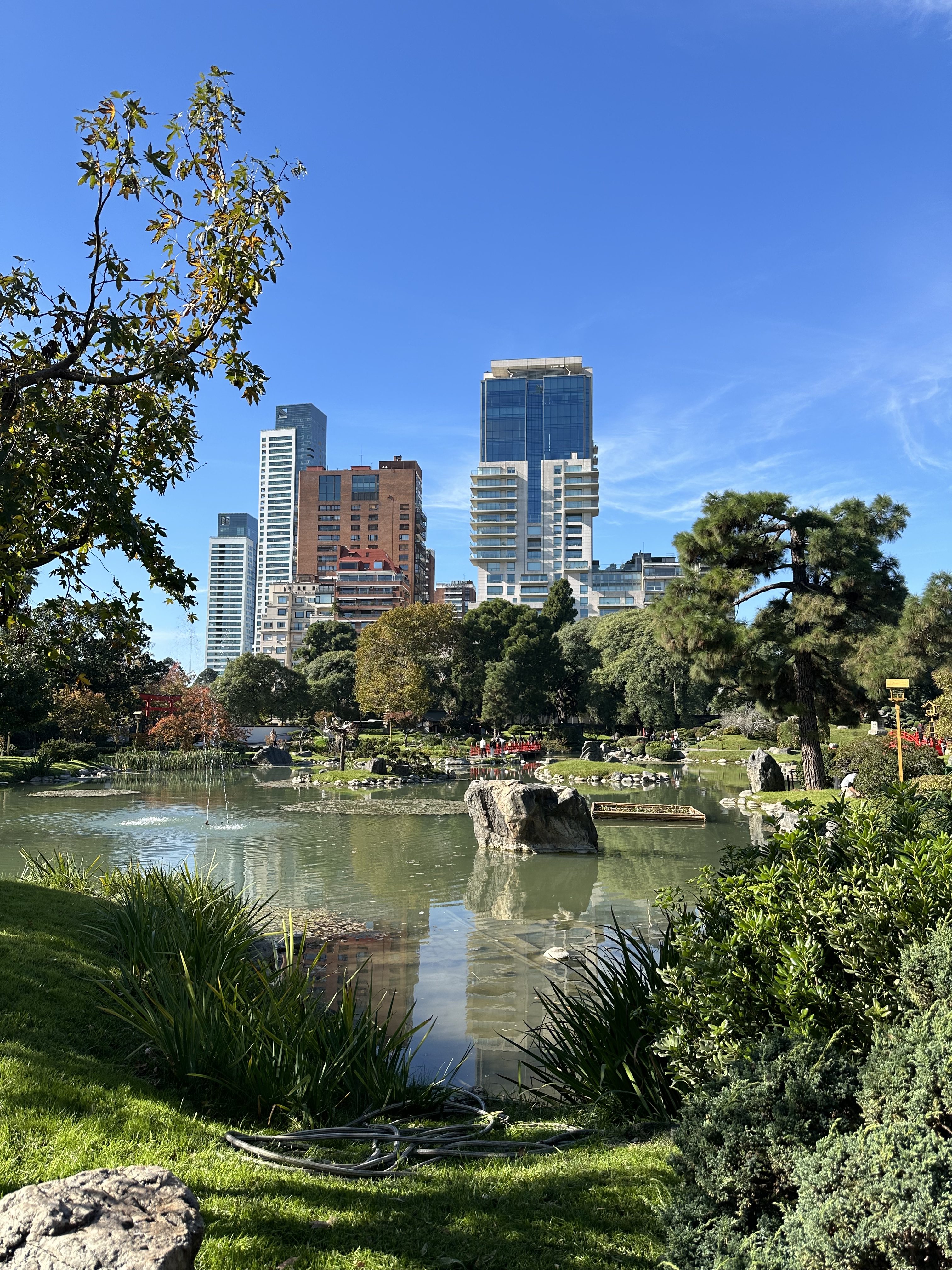


Today was a nice day where we had a chance to sleep in and spend some time in the morning doing what we wanted before we began as a group around noon. I started the day by going to the Japanese Gardens which was very peaceful. It was nice to get outside around some nature and water since we have been in a large city our entire time here. It was also a fun experience to catch a cab in the middle of the street and talk to a local Argentinian to get to the gardens because it is unlike anything I do in the US. After the gardens, we took a taxi back over to Florida Ave. with lots of shopping and many people walking around. After a mid day mcflurry from McDonalds, we went into a few shops to get some souvenirs for the trip. This was also a different experience because Florida Ave. was packed with people. Since we have been ending our academic activities so late in the evening there are not many people walking around by time we begin to shop or explore the city. So, it was cool to be there mid-day to see the city at its busiest and in the everyday routine.
After going to the gardens and shopping a little, we headed back to the hotel to begin our day full of museums. We started by going to the immigration museum which was a huge part of Argentine history. The museum was actually home to many immigrants when they came to Argentina before it was transformed. Many people in Argentina immigrated from countries all over the world which created a melting pot of many people from Europe, Middle East, and North Asia. For example, our tour guide’s parents came from Ukraine to Argentina but she was born here so she would never consider herself Ukrainian. This is the case for many Argentinians because their relatives immigrated during this phase of history that created a melting pot in Argentina. Immigration in the US is different than Argentina in some ways. For example, there are not as many countries represented from the Middle East as there are in Argentina. Another key difference was the recency in immigration in Argentina compared to the US. All of this immigration happened after many immigrants came to America which makes it more interesting to study to me. One similarity is the presence of many Europeans in the immigration history of the US and Argentina.

After the immigration museum, we went to museum of ethnography which had many unique artifacts from ancient history. They had an Egyptian coffin that was very ornate and represented who was buried in it written in hieroglyphics. They also had ancient armor from different time periods and cultures that was used in religious practices or battle. One interesting thing about the museum was the lack of climate control in the building. While many artifacts were monitored often, this surprised me because I expected the climate to be crucial to maintaining a very old artifact.


After the museum, we headed back to our hotel and left shortly after to have dinner with Pitt alumni. This was a nice time to see how US education has impacted people’s live in Argentina and the benefits it gave them. It was another great day experiencing the culture of Argentina.
