


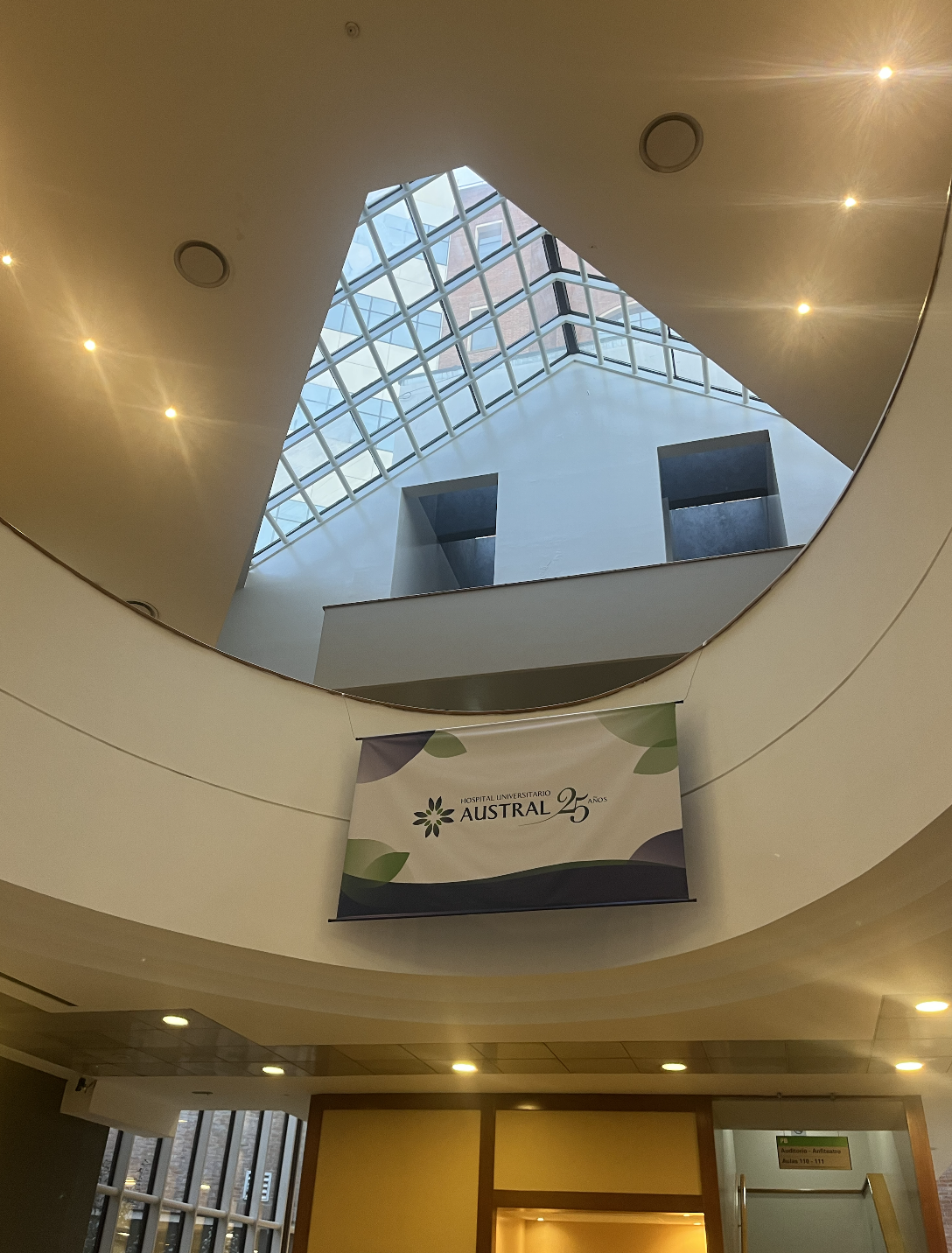
Today was a great day! We had an early start to the day and made the bus ride over to Universidad Austral. Upon arrival, we were greeted with a breakfast where I especially enjoyed the coffee and croissant. We then listened to a presentation given by a professor and an alumna of the university. They spoke about Argentina’s private healthcare system and shared interesting statistics about nursing in the country. It was eye opening to hear how differently nurses are viewed in Argentina compared to the United States, as there is a huge shortage of qualified nurses and they aren’t as recognized for the vital work they do. Therefore, not as many people are interested in going into the nursing profession in Argentina as they are in the United States.
One of my favorite parts of the day was getting the chance to sit and talk with students from the university. At my table were two friendly first year business students, and it was super interesting to compare our daily routines, school experiences, and even social lives. Despite the differences in culture, I found that we had a lot in common, and it was really fun to connect with them. They both spoke English very well, so I didn’t find the language barrier to be an issue.
Universidad Austral has a hospital attached to it that the healthcare students can learn and train at. This hospital was a great example of a private healthcare system for us to experience. One of the biggest challenges that this hospital faces is a shortage of nurses, particularly those with a Bachelor of Science in Nursing (BSN). Nursing shortages are a global issue, but the problem is especially pronounced in Argentina. According to the presentation we heard, only about 11% of nurses in the country hold a BSN, which is a surprisingly low number. As a result, the ratio of qualified nurses to doctors is currently less than one nurse per one doctor. This imbalance can put added pressure on the healthcare system and may negatively impact the overall quality of patient care.

