


Day three at Birmingham City University as we had the opportunity to hear from four different lecturers about many different things affecting health in Birmingham. We heard about public health, female genital mutilation, mental health in nursing, and sexual health nursing. First, I got to learn about basic public health in Birmingham and the different Social Determinants of Health that can effect healthcare access and quality. One thing that stuck out to me was her emphasis on money and GDP of certain areas and the impact it has on life expectancy. I learned that this is due to household income as it decides access to good food, quality education, and more. These things coupled with a weak healthcare infrastructure create an environment where it is not only hard to manage outbreaks, but people do not receive the care they need. I also enjoyed how she tried to help us with our research projects as much as possible. For my presentation, we are looking at refugees and their disparities. She explained to us that refugees often have a language barrier which does not allow for them to get the jobs they have qualifications for as they cannot properly communicate with consumers, coworkers, and authority figures. This can often lead to job market exploitation as they work for less money due to their desperation to find a job as well as their lack of knowledge about what they should be making. Without jobs, finding quality housing is often difficult which can create disparities when it comes to school districts and access to quality education as well as readily available healthcare resources. I found these insights very interesting and helpful towards our presentation.
I also got to learn something completely new today which was Female Genital Mutilation (FGM) which was something I had never gotten the opportunity to know about prior to the lesson today. The professor gave us valuable insight into the different stages of FGM, methods used to conduct the procedure, and social/societal factors that push people to put their daughters through the painful procedure. During an FGM lecture, there was a picture of a razor blade and when I asked if that was what the midwives used to conduct the procedure, the lecturer responded with “if they’re lucky.” That was when it really sunk in to me how terrible the procedure truly is as women are not given any type of numbing or anesthesia to help with the pain. It can impact so much from walking to childbirth, in which women often have to get a reversal procedure to be able to have the baby. When discussing this, we were having a discussion about why this is such a norm in so many countries, especially ones in Africa. The reasons can range anywhere from religion and honor to rape prevention and keeping virginity. She described to us that generational trauma creates a family environment where it is important to have been through this to feel a sense of belonging in your family as well as it just being “something everyone has to do.” Because of the populations of Birmingham, it is more prominent here than America, but we were still taught how to approach women who we may suspect have had the procedures when it comes to treating them which I found very interesting. It put a real emphasis on the level of sensitivity and understanding you need to have as a nurse.
Sensitivity was also a major topic in our fourth lecture by Andrea Driver-Williams in which she discussed her experience as an HIV specialist and someone who deals with sexual health nursing. She explained to us the level of sensitivity we need to have around HIV patients as they do not always fit the stereotype of older gay men, they can sometimes be middle aged heterosexual women or children who get it from various sources, as it is not only transmitted through sex. Hearing about her experience was very valuable as it made me realize how prepared I have to be to see anything as a nurse as people come to us hoping to trust us and receive quality care. The topic of patient trust is huge in HIV nursing as there is such a stigma around HIV patients as people who work in healthcare still view them as dirty or think that they deserve to have the terrible disease. She explained to us the importance of treatment as they can become undetectable, meaning that they will not transmit the disease.
Treatment of patients was also a theme in the mental health in nursing lecture as we got to understand the medicalization of mental healthcare and that long term medication use may not always be the best course of treatment for all patients. I got to understand how important it is to not be judgemental as people have such diverse experiences and that as a mental health nurse, you have to learn how to put biases aside and approach all patients in the manner they need.
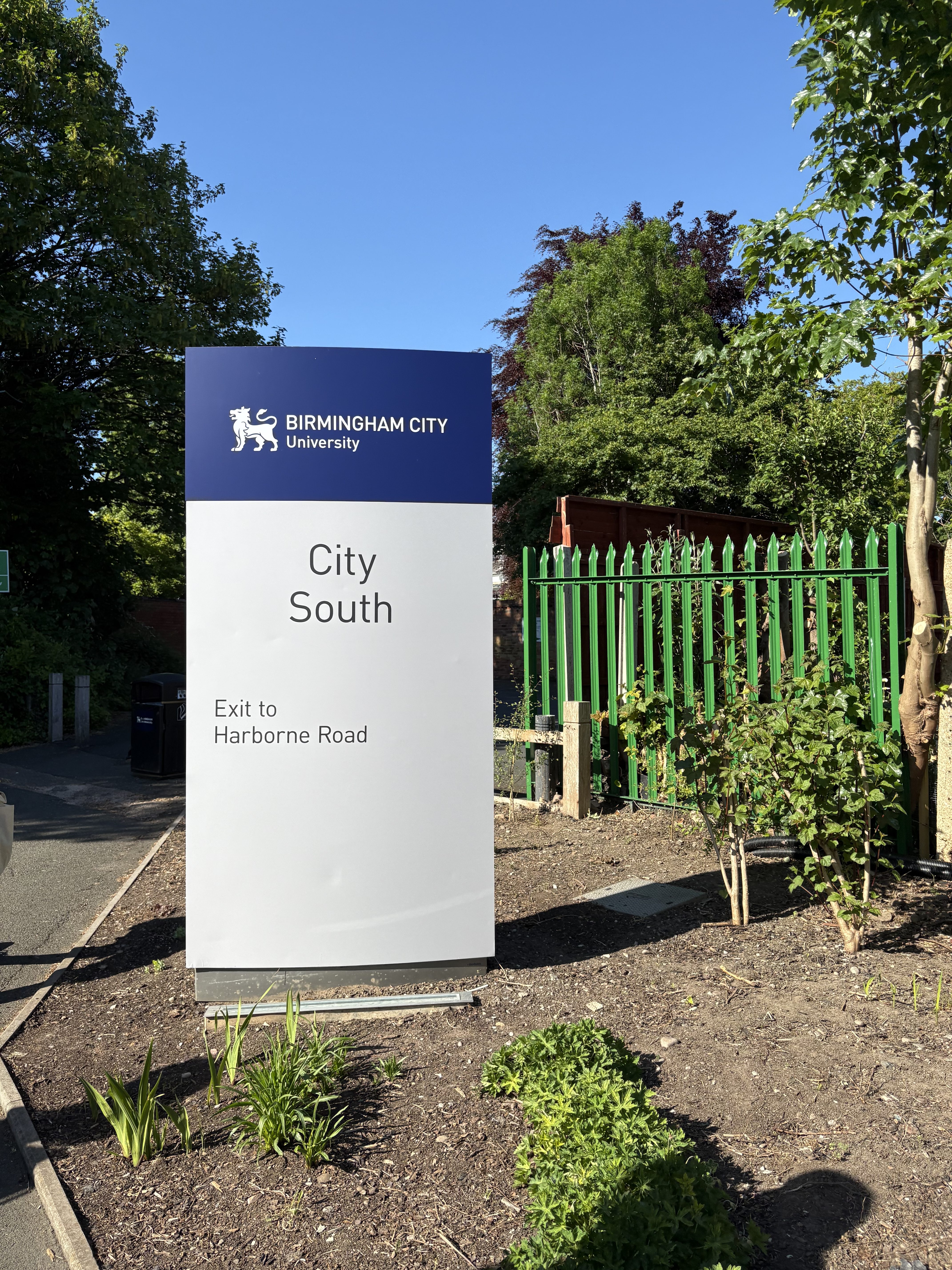
Here are some pictures of the BCU City South Campus and from our dinner tonight with BCU students and faculty!


