


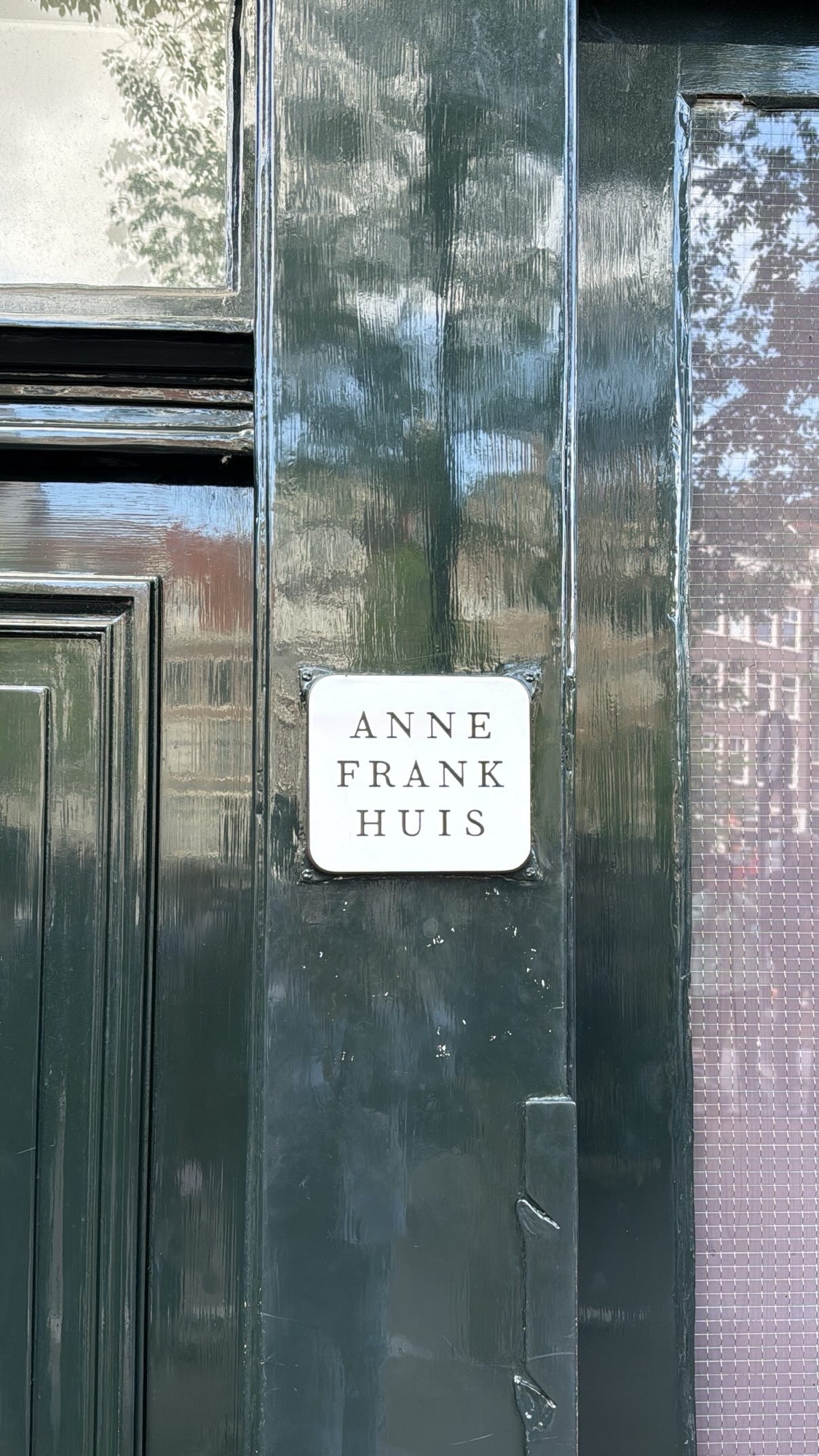
Visiting the Anne Frank Museum in Amsterdam was an unforgettable and emotional journey. Located in Amsterdam, this historic building was the secret annex where Anne Frank, her family, and four others hid during World War II. Walking through the narrow hallways and climbing the steep stairs, I couldn’t help but feel the weight of history within those walls.
The museum preserves the authenticity of the space, allowing visitors to reflect on the experiences of Anne and her family. The original bookcase that concealed the entrance to the annex remains intact, symbolizing both hope and fear. Inside, the rooms are mostly bare since the Nazis confiscated the furniture after the arrest. Still, the atmosphere is powerful, filled with photographs, documents, and excerpts from Anne’s diary.
Seeing Anne’s original diary on display was deeply moving. The familiar red-and-white checkered cover, filled with her thoughts and dreams, was a stark reminder of the humanity behind the history. I couldn’t help but think about how such a young girl captured the resilience and courage of those facing unimaginable persecution.
One of the most impactful parts of the museum is the multimedia presentation featuring survivors and historians discussing Anne’s legacy. It’s a poignant reminder that her story is not just about the past but a call to stand against hatred and discrimination. Hearing testimonies from those who knew Anne added a deeply human layer to the story.
Later that evening, I attended an alumni dinner hosted by the University of Pittsburgh. It was a wonderful opportunity to meet and connect with past students from the university. Hearing their stories and learning about their career journeys was both inspiring and insightful. One alumna shared an interesting fact about Amsterdam’s canals, mentioning that they have a bubble barrier designed to clean the water by removing waste. It’s a fascinating example of how the city works to maintain its iconic waterways, and I thought it was a great insight into the sustainable practices embraced here in the Netherlands. It was comforting to know that being part of the Pitt community creates lasting bonds.
Although it was a deeply moving experience, it was also fascinating to be inside the very place where Anne Frank and her family hid. Walking through the rooms and seeing firsthand where they lived made the history feel more tangible and personal. I was especially struck by the original posters Anne had hung on the walls, the kitchen countertop where meals were prepared, and the steep stairs they climbed daily. These small details brought the story to life in a profound way.
I left the museum with a mix of sadness and admiration—sadness for the immense loss of life and the injustices faced by so many, but admiration for Anne’s enduring spirit and the power of her words. Visiting the Anne Frank Museum is not just about looking back; it’s about remembering the past to build a more compassionate future.

