


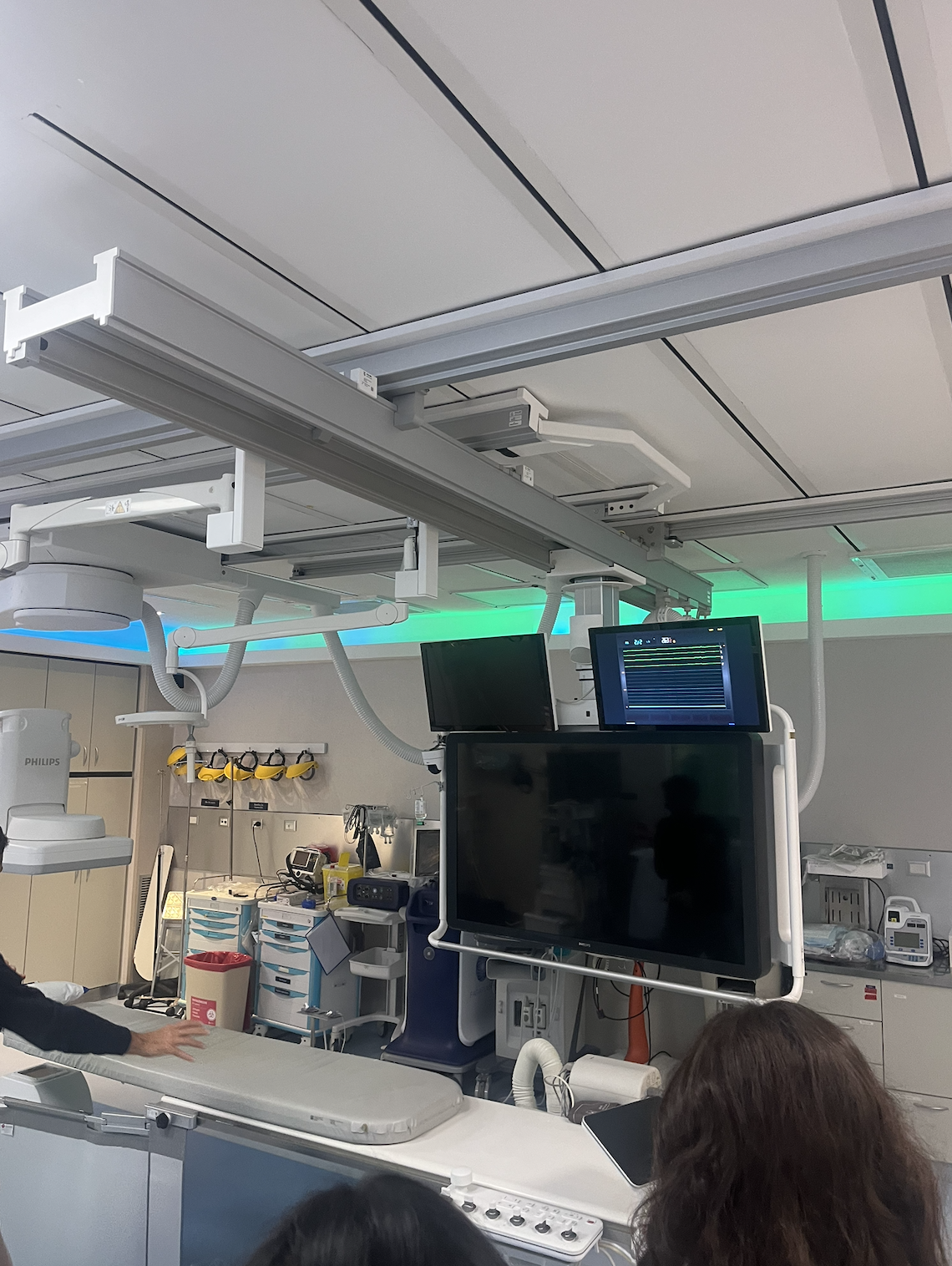
On our ninth day in Argentina, we started off with a bus ride to attend a presentation from Dr. Florencia Ledesma from Medifé/ASE Obra Social. She began with giving us a review about the difference between the public sector, private sector, and social security (Obras Sociales) system. We then dove more specifically into the relationship between Medlifé, a private insurance company, and ASE, an Obra Social. The dynamic between the two has been changing due to the new funding policies introduced by Milei. She explained how the funding is being reorganized, and how Medlifé and ASE are becoming much more similar now than they were before. We then went to our first private hospital, ICBA, where we listened to a presentation done by some of their directors and a nurse who works there. They discussed how they manage quality and innovation of the hospital, making sure to prioritize positive patient experiences. We also learned about all of the technology that they have implemented into their system to provide high-end, efficient care. This hospital had the highest percentage of BSNs that we’ve seen so far, and this is due to them giving incentive for their employees to achieve that level of education. The nurse took us to see three different units in the hospital, and we even got to go into room where cardiac catheterizations are done. Every room we stepped into looked newly renovated, and was extremely clean and nice.
Now that I have seen both public and private hospitals, I am able to first hand compare the two. Emotionally, it was a bit shocking to witness such a significant contrast in the environments. ICBA was an extremely impressive facility as everything was clean, modern, and intentionally designed to support both staff and patients in the most efficient and comfortable way possible. I couldn’t even believe some of the stuff they had in the waiting rooms, such as remote controlled reclining chairs. Not only are they stocked with high quality resources, but as mentioned before, they overall have a more educated staff. However, this feeling of admiration didn’t come without a bit of sadness for the lack of resources the public hospitals receive. The employees at the public hospitals are all very devoted, and you can tell they really care about helping the patients, and not about the money. Paroissien unfortunately had very small rooms, paint peeling off the walls, and a lack of efficient equipment. Morally, this dynamic is very difficult to navigate. Although it would be great for the public sector to receive more funding, it is pretty much impossible to do without taking more money from the wealthy, who will never use those health facilities. Overall, this experience deepened my understanding of healthcare inequities and brought up questions about how systems like Argentina’s can balance quality with accessibility.

