


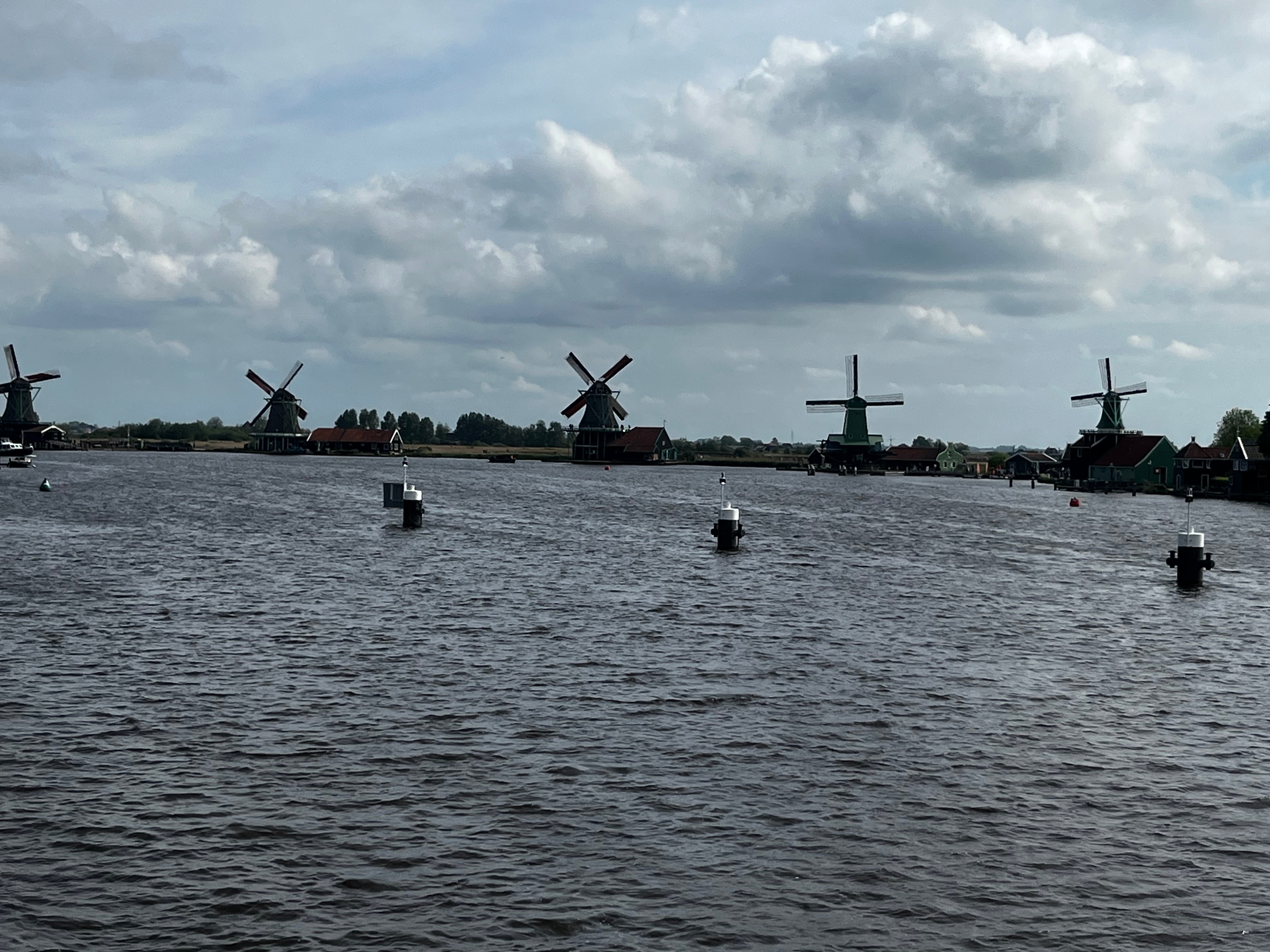
Today was another eventful day in Amsterdam as we visited windmills, the Anne Frank Museum and ate dinner with Pitt Alumni. The day began with a visit to Zaanse Schans. Zaanse Schans is known for its collection of traditional Dutch windmills.


Dutch windmills played a key role in their history as they were crucial for powering equipment and controlling water levels. The mills had several important features. For example, they could be rotated to face the wind and featured adjustable blades for different wind conditions. I learned these windmills played a key role in sustainability as they accomplished various tasks without using as much manual labor. They used wind power instead of fossil fuels to complete various tasks such as powering saws for lumber and mill stones for food products. The windmills also worked with nature as they managed water levels which preserved wetland ecosystems. One other role they played that I learned about is that they acted as a helpful vantage point during the Dutch War of Independence.


After visiting the windmills, we took a train back into central Amsterdam to visit the Anne Frank House and Museum. The house and museum was an important experience as it is essential to learn from the past to create a successful future. At the museum, I learned much more about the harsh conditions that Jewish families and other marginalized groups faced in Amsterdam. The Museum preserved the secret annex of Anne Frank and her family and allowed us to see the cramped and difficult conditions they were forced to endure. After this we finished off the night by eating dinner with Pitt alumni who now live in the Netherlands. It was a great experience getting to hear the various stories and learning how they ultimately ended up living in the Netherlands.