


Today was a very busy day in Buenos Aires! We got to see two completely different healthcare settings in Argentina.


We first took a trip over to Tomas Reggio Primary Health Center, where we met with some of the Sisters and walked through the clinic. The clinic was much smaller than many healthcare facilities in the United States, but it still served a large number of people every month. One thing that surprised me was that many of the medical records were on paper charts in typical filing cabinets. Even though the clinic had far fewer resources, everyone there was extremely hardworking and genuinely cared about the community.


The Sisters explained that many of the medical professionals volunteer their time there, which really showed how community focused the clinic was. We also got to try maté tea and a chocolate bar called Hamlet, which was such a fun cultural experience! Another one of my favorite parts was getting to see the children’s center and getting to see the kids there! I got to meet a sweet girl and talk to her about some of her favorite things. It was interesting seeing how closely healthcare, childcare, and religion were connected in that community.

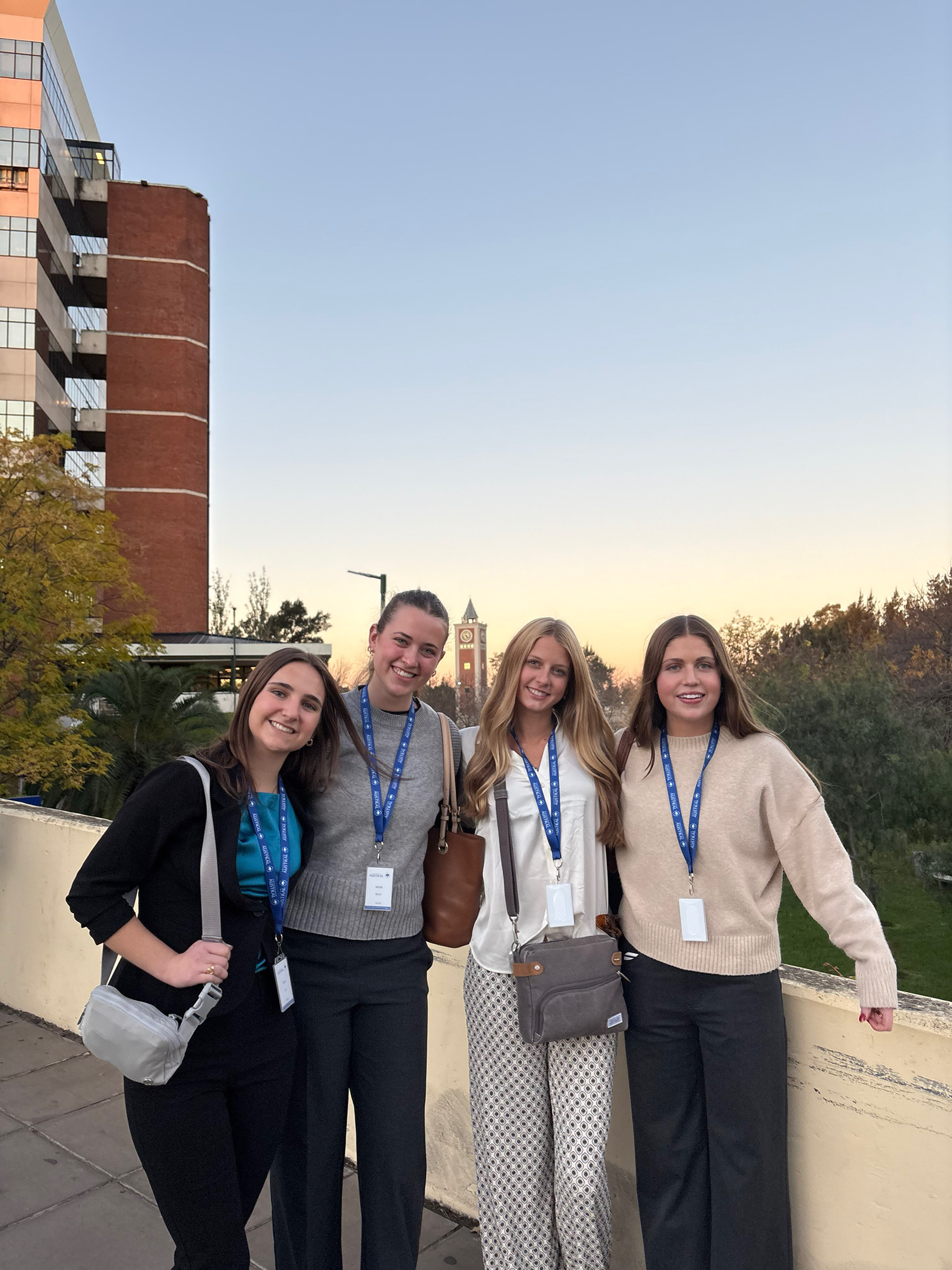
Later in the day, we got to go to Universidad Austral and tour Hospital Universitario Austral. The difference between the hospital and the clinic was very noticeable. Austral Hospital was much larger and more modern, and it had access to advanced technology and many different specialties. We even got to attend lectures about the hospital and insurance system, then toured different units with two nurses, one from pediatrics and one from the bone marrow unit. It was really interesting getting to compare the organization and atmosphere of both healthcare settings.

Seeing both facilities helped me understand how income can affect healthcare experiences in Argentina. The Tomas Reggio clinic relied heavily on volunteers and donations, while Austral had more staff, technology, and specialized care available. Even though both facilities had a big impact on patients, it was easy to see how funding and resources can impact the type of care people have access to.

Overall, today gave me a much better understanding of the differences between public and private healthcare in Argentina. It also reminded me that even when hospitals and clinics look very different, the healthcare workers in both places still share the same goal of helping people and supporting their communities.