


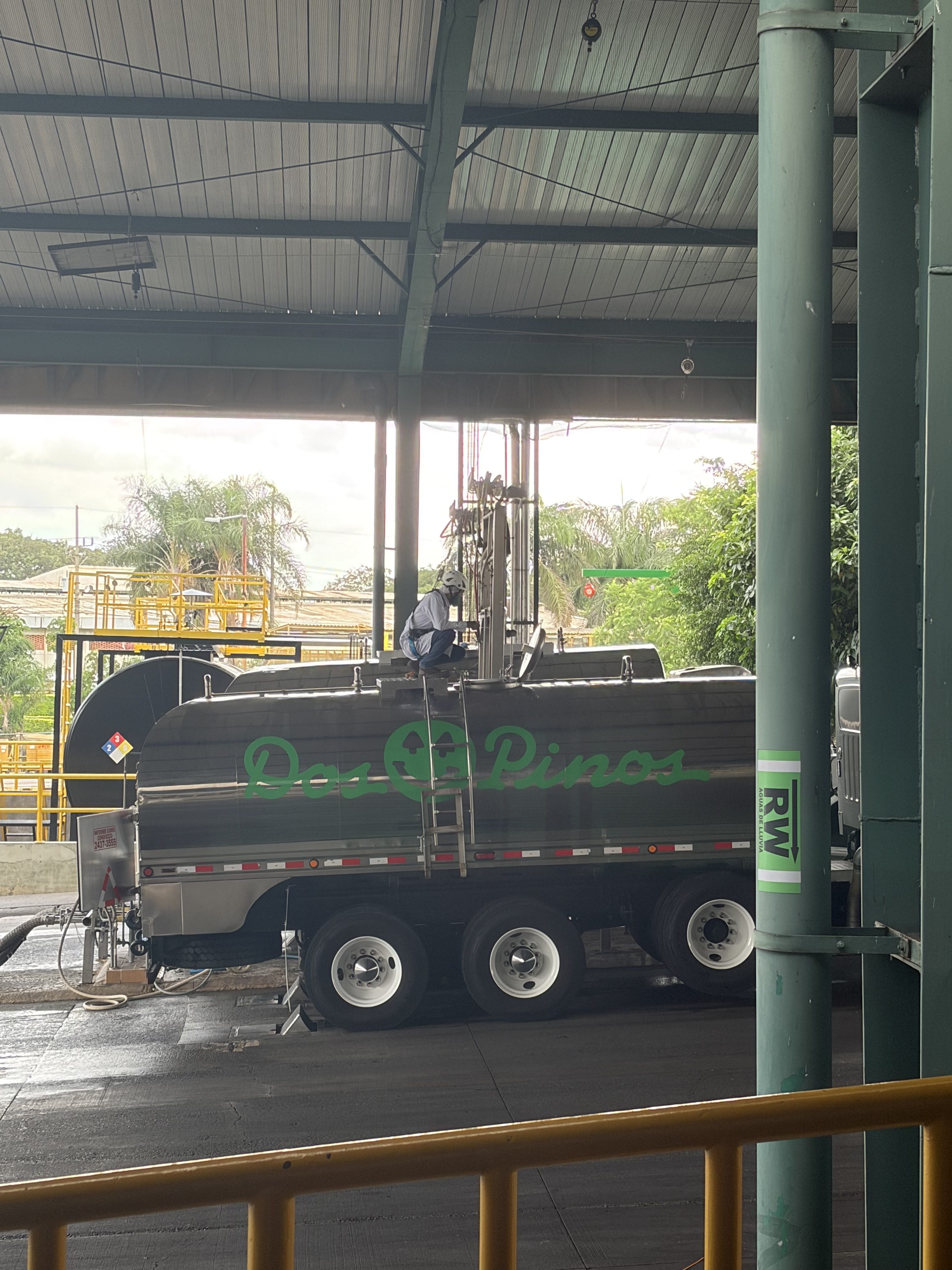
Today, we got to see two different ways of doing business in Costa Rica.
At Kyndryl, the setup felt like a modern tech hub. Their office is in a business park with neighbors like Amazon and Goodyear, and the place has everything: a soccer field, a food court, and a gym. Employees only come in once a week, mostly for team projects, and the office is designed to be open and creative. It’s clear they put a lot into making work flexible and supportive, which is cool to see from a global company.
After lunch, we visited Dos Pinos, and the vibe couldn’t have been more different. The cooperative started with just a couple of dozen farmers, but now thousands are part of it. Instead of profits going to shareholders overseas, everything stays local, and farmers share resources, risks, and rewards. What really stood out was how Dos Pinos gives back: they provide animal stock to farmers who care for the cows, which keeps the cycle sustainable and fair. And their packaging is impressive too, milk and other products can stay fresh for up to ten months, cutting down on waste and making distribution easier.
Seeing both models side by side made me think about who really benefits. Kyndryl brings jobs and global connections, but Dos Pinos feels more rooted in Costa Rica itself. By keeping profits and decision‑making power here, the cooperative strengthens communities and supports farmers directly. Honestly, I think that makes the cooperative model better for Ticos; it’s built to last and built for them.
For my final project on sustainability, this day gave me a lot to think about. Kyndryl shows how workplace culture can be sustainable for employees, while Dos Pinos shows how farming and food systems can be sustainable for communities. Together, they highlight different angles of sustainability shaping Costa Rica’s economy, but for me, the cooperative model feels like the one that truly delivers lasting value at home.

