


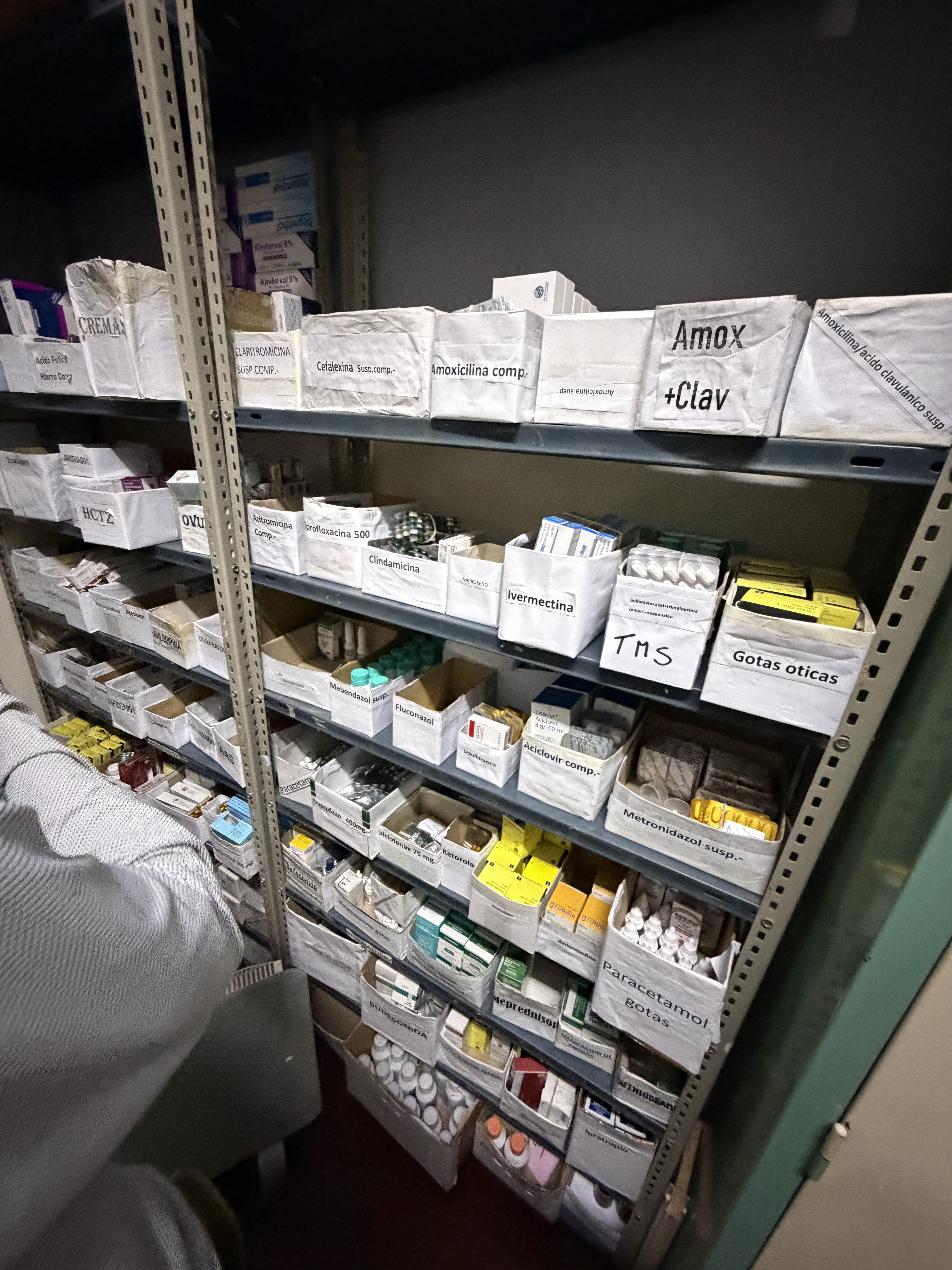
Today was another super eventful day. Today we explored deeper into the technicalities of medical and financial scaffolding which bolsters the Argentinean medical system behind the scenes. We started off the day by taking a boat to Tigre and getting the opportunity to see a public clinic and water ambulance. This clinic served a more rural area, but yet again I was blown away by the efficiency of treatment and the decisiveness with which it targets the needs of the community. While these clinics are smaller, they are truly powerhouses of primary care. This clinic is primarily funded by the government, and minor contributions from donors and municipalities aid the clinic in providing healthcare services. This clinic offered services like pediatrics, obstetrics and gynecology, and specialized in emergency services as a step primary to the community before the intervention of a larger hospital. This clinic had 3 consulting rooms and 1 operational procedure room. I spoke with the woman about the most common gynecology services, which are the implant or injection due to the longevity and barriers to access for the rural community of Tigre. Prenatal care and family planning services were also very popular here. The pharmacy was different from the Thomas Reggio health center due to the nature of medications shifting from chronic to emergent- the former stocked their shelves with diabetes medication and cholesterol medication while the latter mostly contained strong antibiotics. The star of this clinic is the water ambulance, fully equipped with multiple rooms for patient care as well as many medications. The boat makes rounds through Tigre 4 days per week from 8am-5pm, acting as the ultimate community initiative, bringing healthcare to the people instead of vice versa. Next, we visited the San Isidro public hospital which serves the AMBA, or metropolitan area with high densities of people. This hospital is funded by the governmental allocation of money through municipalities, essentially taxpayers in the area. This hospital specializes in neonatal, maternal, and pediatric care as well as intensive care. This hospital was focused on a mix of primary and tertiary care, tackling similar issues to Austral’s private hospital without the resources or beds to catch up. In the ICU, only some patients were able to access new beds while others were using very old equipment. All the patients were in one room with no partition, and in the inpatient/surgical wing patients were doubled up in rooms. The patients here were also dealing with more acute conditions such as respiratory distress, sepsis, trauma, and pneumonia in contrast to Austral, treating oncology or hematology chronic tertiary care patients. San Isidro hospital is providing life saving care, however the allocation of funds from the government lack order, and there is no accounting of the process or continuity of care. It is a disjointed and decentralized system, contributed to by the attention of hospitals being limited to acute care. The push for primary care is what will not only prevent patients from needing to go to the hospital, but will also prevent beds being taken up by non critical patients. Primary care also swings the balance because it is cheaper for all parties to access care proportional to the severity of the condition.


