


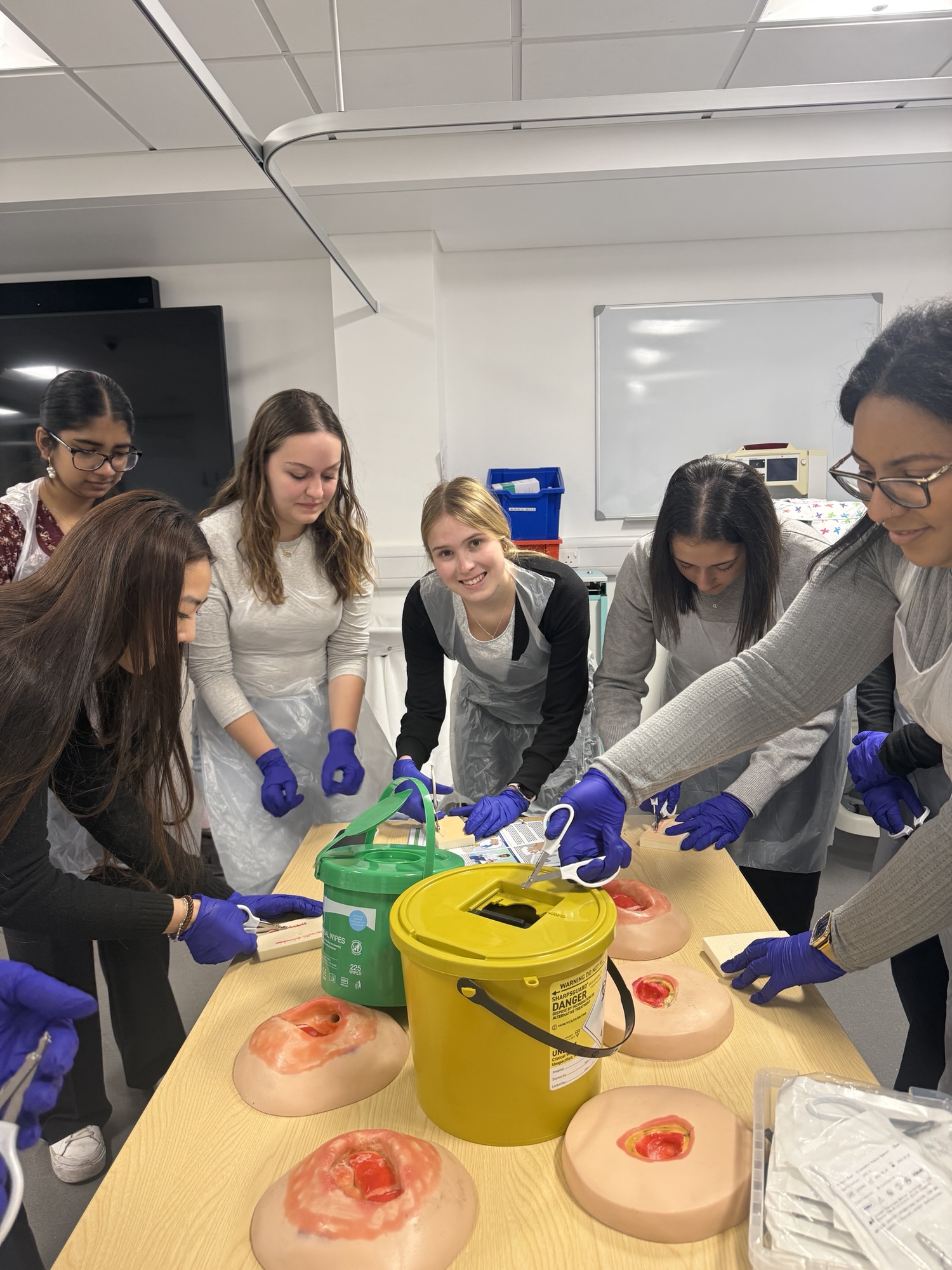


This cold weather has turned this honorary Brummy into a popsicle. The cold weather is actually quite pleasant, but the wind at 15mph has made me shiver for the past two days. Our brisk walks have turned from a lovely stroll to walking through the freezer isle of a grocery store. It makes me laugh because my hair looks haphazard by the time we get there. Today’s agenda is all about learning four skills that we nurse students will learn in the Fall semester. I was quite excited because skills lab is one the hardest part of nursing school. This lab simulation is a test to see if you are a danger to your future patients or are you competent enough to go through clinicals.
This morning I got to go with Chinenye to learn about wounds, maggot therapy, and how to bind a wound or sprain. Wounds and burns are mostly what Chinenye likes to work with in a clinical setting. She is so passionate and enthusiastic about teaching it. I felt completely comfortable to learn such a vital skill with her. Our first activity, was to learn how to properly pull out staples from a wound that is healed or partially healed. The most important thing about these staples is that you do not pull them all out. There may be a portion of this wound that still needs to heal and you do bot want to extend the healing time for your patient. We use a tool that gently bends the staples of the wound into a M shape. This tool allows you to get the staple out with no tearing of the skin. Staples are mostly used in less muscle density and it makes a lot of sense. I remember when I saw a video of a woman getting staples after a Cesarean and thought “why wouldn’t you use stitches instead?” I know why they shouldn’t use staples and stitches were the better choice.
When she said maggot therapy, I was grossed out thinking they put nasty maggots into the wound, but the process is not as crazy as I thought. Which thank goodness because bugs gross me out. Maggot therapy is used because the enzymes that they produce cause dead tissue to slough. Which makes it so much easier for nurses to go in and clean it off. These maggots come in as eggs in a sealed mesh bag. They are sterile and must be used in two days. I’m goad they come in as a bug stage because I could not handle them as larvae, but it makes me appreciate them for the job they are doing. When you dispose of them, Chinenye said you have to thank them for their job. I never thought I would be thanking maggots for helping and not screaming for being gross. We were taught how to use bandages for sprains and if it needs to cover the wound. It was actually quite fun because we learned how to bandage someone that was amputated.


Last but not least, I got to put in a catheter today! I was so excited for this because I may go into midwifery and I got the female manakin to do it on. Catheter’s are super important in midwifery because if you do not empty the bladder before birth, it can cause an obstruction. I completely forgot this was a possibility. Blessing, our instructor, was kind and super funny to listen to. She made this whole simulation super fun and knowledgeable. Doing this lab really helped drive home how to use sterile gloves and to make sure the field is sterile. Catheters are the easiest way to give your patient a Urinary tract infection (UTI) or a kidney infection. This area of the body produces the most microbes, so we do not want to introduce them once we already cleaned our patient.
Finally, our last sim was to learn how to put in a nasogastric tube (NG tube) and gastric tube. These tubes are super important for feeding patients that are able to eat or swallow food normally. These feeding tubes are a lot more intimidating. I feel uncomfortable doing this on a patient because of how invasive it is. One wrong move and you could potentially put food inside of your patient’s lungs. Blessing talked about a colleague that did it and it’s a very difficult procedure to save a patient from. I really enjoyed doing these labs and look forward to doing this back home in Greensburg.