


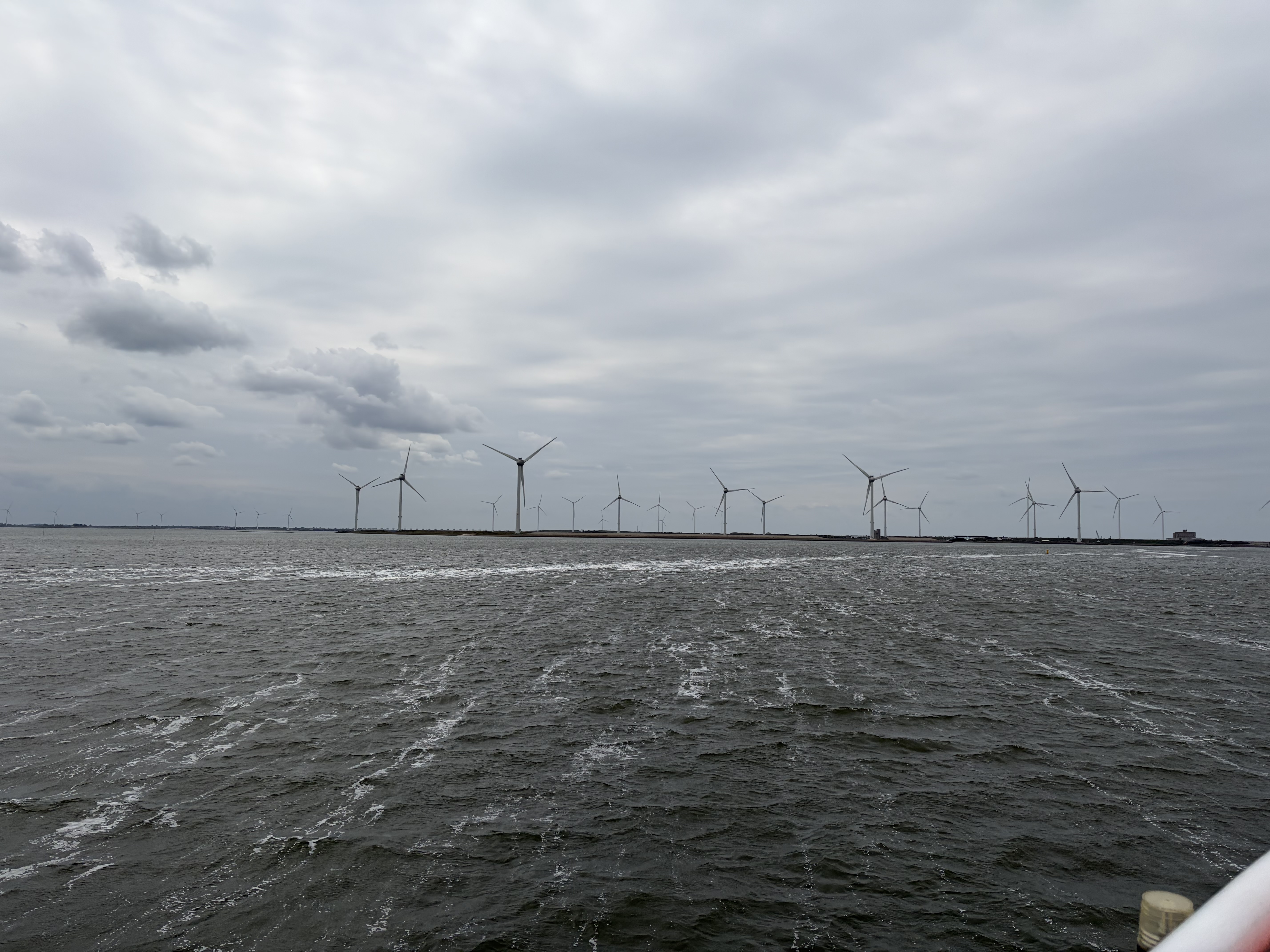
Day 10: Today, I woke up to a sky full of clouds filled with gloom. The forecast predicted it to be around 52 degrees Fahrenheit, but I knew it would be colder with the wind coming off the coast. For our second full day in Rotterdam, we traveled to the Delta Works. Specifically, we went to Oosterschelde, Zeeland, to see Deltapark Neeltje Jans, the Delta Works Amusement Park. This park features a huge museum, some outdoor attractions, a boat tour, an aquarium, and more.


A quick history of how and why the Delta Works came to be: In 1953, the low-lying lands of the country faced a devastating flood. Even though dikes (like a retaining wall for water) were in place, they were not up to the standard the community needed. Dikes also have to be regularly maintained and protected, which can cost lots of money, time, and energy. This flood was monumental, as shown by the following statistics: 1836 people died, 72,000 people evacuated, 400,000+ hectares of land were flooded, 400,000+ houses were damaged or destroyed, and 200,000+ cattle drowned. Due to the vulnerability of this below-sea-level land, the Dutch government knew something had to be done to prevent another disaster.
To protect themselves and their community, the Dutch would need to design and implement a way to retain water that was stronger and more reliable than dikes, dams, and locks. Thankfully, their team of engineers designed the Delta Works’ storm surge barriers. There are 45 storm surge barriers in place, and an extra one was built just in case, but it was not needed, so it sits outside the amusement park. These barriers still run on diesel power as they did when they were first built, but they can be converted to wind energy. During the building and implementation processes, many samples of the water and marine life were taken to count the inventory of the biodiversity and overall quality of the water to preserve the environment.


After we toured the museum, went on the boat tour, and ate lunch, it was time for us to explore the amusement park. We got to go into a storm simulator that has winds up to 110 km/hr! Being in this simulator was surreal, as I could not imagine being in the heart of the storm in the cold and late at night. We also watched a seal presentation, followed by going down the water slide. Overall, this park was a ton of fun and very insightful into the ways of water management.

My personal favorite tidbit of information was learning that the wind turbines at Delta Works Amusement Park have sensors to detect flocks of birds. If birds are detected, the wind turbines will pause to protect the flock. These sensors alone save around 10,000 birds each year. This technology makes me wonder how feasible it would be to implement it on every wind turbine. Because the technology is already created, half of the work is already done! I do hope to see these sensors applied to more wind turbines as they truly help the biodiversity of the environment.
